Loading...
Webinar
Hiring or Firing — The Next Step for AI-Augmented SOC Teams
Webinar
Hiring or Firing — The Next Step for AI-Augmented SOC Teams

Hiring or Firing — The Next Step for AI-Augmented SOC Teams
Hiring or Firing — The Next Step for AI-Augmented SOC Teams
Loading...
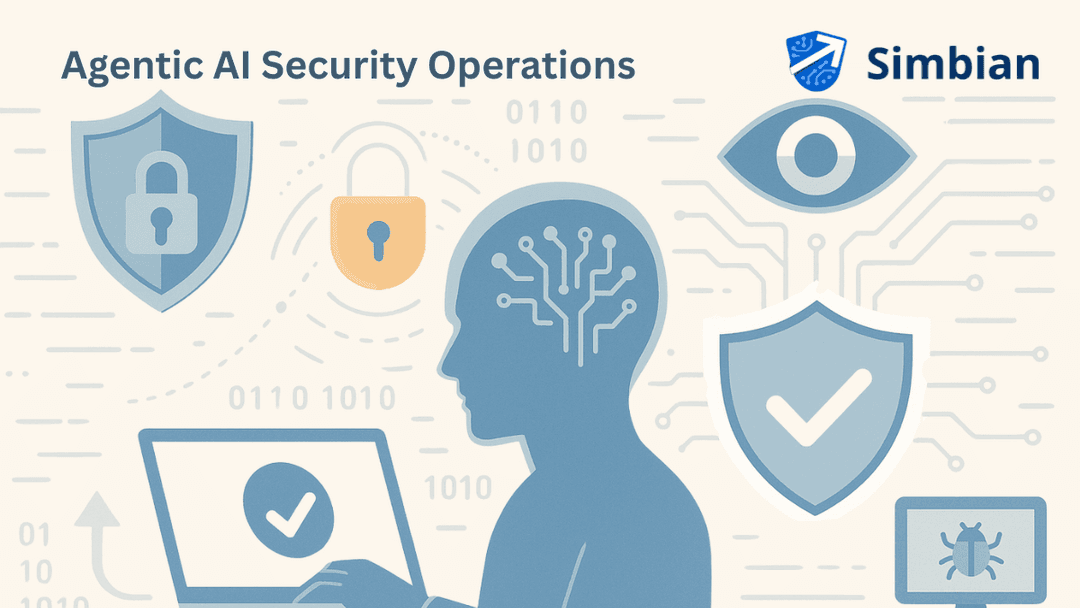
Security Operations Centers (SOCs) are drowning in alerts. The average SOC processes millions of security alerts daily, with analysts struggling to keep pace with the sheer volume of threats. Alert fatigue, skill shortages, and the increasing sophistication of cyber-attacks have pushed traditional SOC models to their breaking point.
Agentic AI in cybersecurity refers to autonomous, adaptive AI systems that can make context-aware decisions, orchestrate tools, and execute multi-step defensive workflows with minimal human input. Unlike traditional automation that follows rigid, predefined rules, agentic AI continuously learns, plans, and reacts in real time to evolving threats.
These AI systems don't just analyze data—they act as digital analysts, capable of performing contextual investigations autonomously, making dynamic decisions based on real-time data, and interacting with security tools to orchestrate responses across external systems. By 2028, agentic AI will autonomously make 15% of day-to-day work decisions, up from 0% in 2024, according to Gartner.
The key differentiator lies in their ability to be able to perceive, reason, and act independently to resolve complex issues. These systems are intelligent assistants to cyber professionals to protect digital assets, mitigate threats, and enhance efficiency in security operations centers.
AI SOC agents operate through a sophisticated technical architecture consisting of three primary modules:
Perception Module: Processes sensory inputs from security tools, network traffic, logs, and threat intelligence feeds to extract meaningful features and patterns.
Cognitive Module: Handles goal representation and decision-making processes, analyzing threats in context and determining appropriate responses.
Action Module: Executes selected tasks through various interfaces, coordinating with security tools to implement responses.
When integrated with systems like EDR, SOAR, and threat intelligence platforms, agentic AI can coordinate complex actions such as validating anomalies, cross-checking threat intelligence, isolating hosts, launching forensic tasks, notifying incident response teams, and recommending fixes. These capabilities depend on secure API access, strong orchestration logic, and careful governance to ensure safe, accurate decision-making in high-stakes environments.
The future of autonomous SOCs will be in collaborative multi-agent frameworks, where specialized AI agents will collaborate with each other, each being good at discreet tasks, all under the coordination of an overarching orchestrating agent. This will guarantee accuracy and efficiency and will result in a more interconnected and organized defense.
A typical multi-agent SOC architecture includes:
AI SOC Analyst Agent: Acts as the primary coordinator, responsible for deep research, planning, and execution, delivering near-human-level critical analysis and real-time decision making
CTEM Agent: Proactively remediate exposures based on Impact, Severity, Count and exploitability of exposures at AI speed.
VRM Agent: Autonomously assess and prioritize vulnerabilities in your applications using contextual production data, create fixes, test fixes.
Threat Hunt Agent: Autonomously investigate and respond to your security alerts 24x7x365, using latest knowledge. Scale to cover 100% of your alerts while keeping costs manageable. Let your analysts focus on real threats, not alerts.
Multi-agent systems excel especially for breadth-first queries that involve pursuing multiple independent directions simultaneously. These systems work mainly because they help spend enough tokens to solve complex problems, with distributed work across agents providing separate context windows for parallel reasoning.
The distinction between autonomic and autonomous SOCs is crucial for understanding implementation approaches. Autonomic systems are self-managing and can adapt to changing conditions but operate within predefined boundaries and rules. Autonomous systems, by contrast, are self-governing and can make independent decisions without human intervention.
The most effective implementations use a human-in-the-loop approach where automation covers routine tasks while analysts intervene for high-level decision-making or complex scenarios.
Agentic AI is already transforming security operations across multiple use cases:
Real-Time Threat Detection and Response: AI agents continuously monitor network traffic, analyze user behavior, and detect anomalies that indicate malicious activity. Once threats are detected, they initiate automated responses such as isolating compromised endpoints or blocking malicious IP addresses.
Automated Alert Triage: Agentic AI processes and prioritizes alerts, dismissing non-threats and flagging high-risk incidents, reducing analyst workload by up to 90% in some implementations.
Vulnerability Management: AI agents continuously monitor vulnerabilities, autonomously assess their severity, dynamically prioritize patching efforts, and automate remediation in controlled environments.
Threat Hunting: Agentic AI learns normal network behavior patterns and autonomously investigates deviations, tracing anomalies, correlating intelligence, and uncovering hidden threats that might otherwise go undetected.
Incident Response: AI agents cut response time for software security vulnerabilities by investigating risks in seconds rather than hours, searching external resources, evaluating environments, and prioritizing findings for human analysts.
Despite their promise, implementing agentic AI systems presents significant challenges:
Technical Complexity: Agentic AI requires substantial computational power, high-performance GPUs and TPUs, scalable cloud services, and robust memory management systems. Organizations must also address integration challenges with legacy systems that often have outdated APIs.
Security Concerns: Multi-agent systems face vulnerabilities including communication security, data poisoning, coordination disruption, and potential adversarial exploits.
Data Quality and Skills Gap: Implementing agentic AI requires high-quality data and skilled SOC Analysts and personnel including data scientists and IT professionals. Many organizations struggle with data quality issues and lack the necessary expertise to implement these systems effectively.
Key technologies driving this transformation include AI-driven threat detection using behavioral analytics, automated incident response through SOAR integration, self-healing and predictive defense capabilities, and scalable cloud-native security operations.
As cyber threats continue to evolve at machine speed, organizations that embrace agentic AI will gain significant advantages in threat detection accuracy, response times, and overall security posture. The question isn't whether autonomous SOCs will become mainstream—it's how quickly organizations can adapt to this new paradigm.
Ready to transform your security operations with agentic AI?